
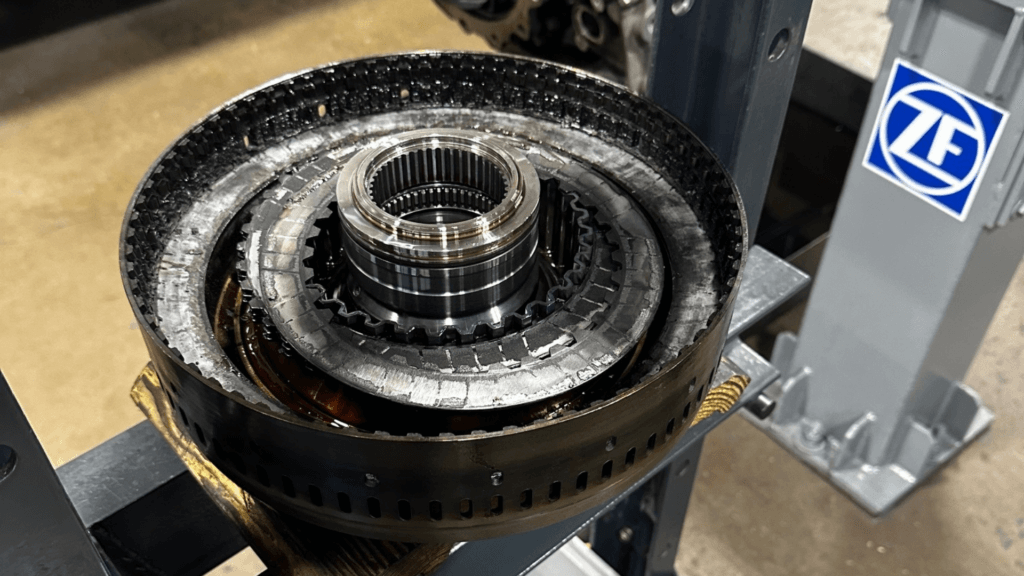
ZF Ecolife transmissions are designed to handle demanding duty cycles in buses, coaches, and other heavy vehicles that operate for long hours under consistent load. When they perform well, they tend to do so quietly and reliably. When they don’t, the damage can escalate fast. One of the most destructive issues we see is ZF Ecolife clutch overheating due to low oil.
Low oil is rarely dramatic at first. There may be no sudden shutdown, no immediate failure, and no obvious puddle under the vehicle. That is what makes it dangerous. By the time symptoms are noticeable, clutch damage is often already underway. Understanding how this happens, how to reduce the risk, and what proper repair looks like once overheating occurs can make the difference between a controlled repair and a major transmission failure.
Why Oil Level Is Critical in ZF Ecolife Transmissions
In a ZF Ecolife transmission, oil does far more than lubricate moving parts. It plays a central role in cooling, pressure control, and clutch engagement. Every time a clutch applies, oil absorbs heat generated by friction and carries it away from the clutch pack. When oil level drops, that heat has nowhere to go.
Unlike older designs where marginal oil levels might only cause delayed wear, modern transmissions like the ZF Ecolife are tightly engineered systems. They rely on consistent oil flow to maintain stable operating temperatures. When oil volume decreases, the system loses its ability to manage heat, especially during sustained operation.
This is why ZF Ecolife clutch overheating due to low oil is not a gradual problem. Once temperatures begin to rise, damage accelerates.
Common Causes of Low Oil in ZF Ecolife Units
Low oil conditions rarely come from a single dramatic failure. In most cases, they develop quietly over time. Some of the most common causes include:
Small external leaks that evaporate or spread rather than drip
Improper fill procedures after routine service
Breather or expansion system issues that allow oil loss
Gradual consumption masked by normal operation
What makes these issues difficult to catch is that the transmission may continue to operate normally for a period of time. Shifts may feel acceptable, and warning indicators may not trigger immediately. Meanwhile, internal temperatures are rising.
This slow progression is why ZF Ecolife clutch overheating due to low oil often catches operators and maintenance teams off guard.
ZF Ecolife Clutch Overheating Due to Low Oil
When oil level drops below the point required for proper circulation, clutch cooling efficiency declines rapidly. The sequence of events is consistent and predictable.
First, reduced oil volume limits heat removal from the clutch packs. Each engagement generates more heat than the oil can carry away. As temperatures climb, friction material begins to degrade. Once that degradation starts, it compounds the problem by creating debris that further interferes with oil flow.
As overheating continues:
Friction material loses its ability to grip consistently
Steel plates begin to discolor and warp
Oil breaks down and loses protective properties
Heat spreads to adjacent clutch packs and components
At this stage, ZF Ecolife clutch overheating due to low oil is no longer an isolated issue. It becomes a system-wide problem affecting multiple internal components.
Early Warning Signs Before Clutch Damage Becomes Severe
One of the challenges with overheating-related failures is that early symptoms can be subtle. They are often dismissed as minor operational quirks rather than warning signs.
Common early indicators include:
Slight changes in shift feel during extended operation
Increased operating temperatures over time, not spikes
Performance loss under sustained load
Intermittent warnings that reset after cooldown
These signs may come and go, which makes them easy to overlook. Unfortunately, intermittent symptoms often mean that overheating has already begun. Addressing oil level issues at this stage can sometimes limit damage, but once friction material is compromised, internal repair is usually unavoidable.
What Happens Internally Once Overheating Occurs
Once overheating takes hold, internal damage progresses quickly. Clutch packs are particularly vulnerable because they are designed to operate within a specific temperature range. When that range is exceeded, materials behave differently.
Inside the transmission, overheating leads to:
Burnt or glazed friction material that can no longer engage properly
Warped steel plates that prevent even clutch application
Debris contamination throughout the oil circuit
Reduced hydraulic efficiency due to clogged passages
This internal contamination does not stay confined to one area. It circulates through the transmission, affecting valves, bearings, and seals. This is why ZF Ecolife clutch overheating due to low oil so often results in widespread damage rather than a single failed clutch.
Why Overheated ZF Ecolife Clutch Damage Is Rarely Isolated
A common misconception is that overheated clutch damage can be corrected by replacing only the visibly damaged components. In reality, heat and debris do not respect boundaries inside a transmission.
Once overheating occurs:
Multiple clutch packs are often exposed to elevated temperatures
Oil contamination reaches sensitive control components
Seals and elastomers harden or lose elasticity
Wear accelerates across the entire unit
Attempting partial repairs in these conditions increases the risk of repeat failure. Even if the transmission returns to service, underlying contamination and heat damage often resurface later. This is why addressing ZF Ecolife clutch overheating due to low oil requires a comprehensive approach.
What Proper Repair Looks Like After a Low-Oil Overheating Event
Once overheating-related clutch damage has occurred, the goal shifts from prevention to restoration. Proper repair focuses on eliminating heat damage, contamination, and compromised components.
A correct repair process typically includes:
Complete teardown and inspection of the transmission
Identification of all heat-affected clutch packs and hard parts
Replacement of friction material and damaged steels
Thorough cleaning of oil circuits to remove debris
Inspection of valves, seals, and bearings affected by contamination
Simply replacing burnt clutches without addressing the broader impact of overheating leaves risk in the system. For ZF Ecolife units, restoring reliability means returning the transmission to stable thermal and hydraulic operation.
Preventive Maintenance That Actually Reduces Risk
Preventing overheating-related failures is less about checklists and more about awareness. Oil level alone does not tell the whole story. Trends matter more than snapshots.
Effective preventive practices include:
Monitoring temperature trends over time, not just warning events
Investigating minor oil losses before they accumulate
Ensuring correct fill procedures after service
Understanding how duty cycle affects heat buildup
Addressing a full ZF Ecolife transmission maintenance is the most effective way to avoid the clutch overheating due to low oil. Once overheating begins, options narrow quickly.
How Precision Transmission Supports ZF Ecolife Repairs Nationwide
When overheating-related failures occur, experience matters. ZF Ecolife transmissions require careful evaluation and disciplined repair processes to ensure reliability after service.
Precision Transmission supports customers nationwide by diagnosing, repairing, and remanufacturing ZF Ecolife units affected by overheating and oil-related failures. Our focus is on restoring performance, not masking symptoms.
We ship and serve nationwide, with locations in:
Colmar, PA
215-822-8300
Fort Myers, FL
888-343-8912
Whether you are addressing early warning signs or managing the aftermath of ZF Ecolife clutch overheating due to low oil, the right approach makes all the difference in long-term reliability.