
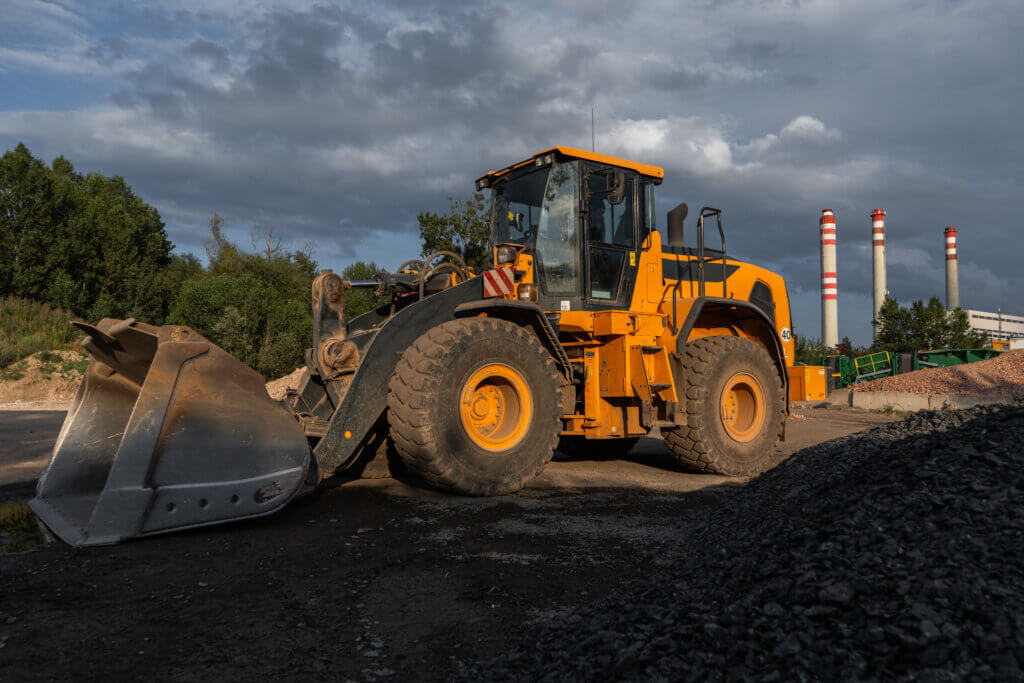
Every hour a crane, loader, or pushback tractor sits idle for a transmission problem is an hour of missed schedules and lost revenue — and most of those failures start small and go unnoticed until they’re expensive. Off-highway and heavy equipment transmissions don’t fail like an on-highway truck’s does; they’re built around powershift clutch packs, torque converters, and hydraulic control systems that respond differently to duty cycle, load, and heat than anything in a passenger fleet. These heavy equipment transmission maintenance tips are built around the specific failure points we see most often across cranes, construction equipment, and ground support units — not generic “check your fluid” advice.
Why Heavy Equipment Transmission Maintenance Can’t Be an Afterthought
A crane or wheel loader transmission spends far more time under sustained load, at low speed, or cycling directional shifts than an on-highway unit ever does. Powershift and hydrostatic transmissions manage that load through clutch packs and hydraulic pressure rather than a simple mechanical gearset, so heat and contamination affect them faster and more severely on equipment logging hours under constant load-and-stop cycles than on a highway truck logging miles at steady speed. Skipping ahead on service intervals here doesn’t just shorten the transmission’s life — it turns a routine fluid or filter service into an unplanned teardown during a job that can’t wait.
Heavy Equipment Transmission Maintenance Tips by Application
The core failure points are consistent across equipment types, but which one matters most — and how often to check it — depends on what the machine actually does all day.
Cranes: Watch Clutch Pack Wear and Hydraulic Response
Crane transmissions cycle through directional and range shifts constantly during lift and swing operations, which accelerates clutch pack wear faster than steady-state operation would. On units running ZF Off-Highway platforms like Ecomat or TC Tronic, or Twin-Disc powershift transmissions, delayed engagement or a harsh shift under load is usually the first sign of clutch pack wear rather than a hydraulic system fault — don’t assume it’s the pump before checking clutch condition. Fluid analysis at shorter intervals than the OEM default catches contamination from clutch material before it damages the valve body or torque converter.
Construction Equipment: Prioritize Fluid and Filter Intervals
Wheel loaders, dozers, and excavators running dusty or debris-heavy job sites put transmission fluid and filtration under more stress than the manufacturer’s standard interval accounts for. On ZF Ecolife and AS Tronic units common in this category, along with Dana/Spicer and Funk transmissions, shortening filter change intervals in high-debris environments is one of the most effective ways to prevent starved lubrication and overheating. Carraro-equipped articulated machines with hydrostatic drive components need the same attention paid to cooler line integrity, since a partially restricted cooler often shows up as gradual overheating rather than a sudden failure.
Ground Support: Manage Frequent Directional Cycling
Pushback tractors and other ground support equipment run almost entirely on directional shifts — forward and reverse, load and unload, repeated dozens of times per shift. That cycling pattern is hard on synchronizers and shift components in a way that steady forward operation isn’t. We’ve serviced ground support transmissions used in demanding applications, including equipment used to move Air Force One, and the pattern holds across the fleet: catching early shift hesitation or delayed engagement before it becomes a full synchronizer failure is the difference between a filter and fluid service and a teardown.
General Heavy-Duty Transmission Maintenance Tips Every Fleet Should Follow
Beyond the application-specific checks above, a few standard practices apply across every heavy equipment transmission we service:
- Check fluid condition, not just level. Discolored fluid, a burnt smell, or visible metal particulate on the dipstick or filter points to internal wear long before a dashboard warning shows up.
- Treat a burning smell as an immediate stop-and-inspect signal. It’s rarely minor — it usually means the clutch material or fluid itself is overheating under load.
- Inspect the cooling system on a fixed schedule. A partially restricted cooler line often causes gradual overheating rather than a sudden failure, so it’s easy to miss without a dedicated check.
- Don’t let a fault code that clears itself go unlogged. An intermittent code can point to a failing solenoid or sensor even when it doesn’t stay set.
- Track hours, not just calendar time. Equipment with uneven usage across a fleet wears at different rates than a fixed service calendar assumes.
When It’s Time to Call in a Transmission Specialist
Any of the symptoms above — delayed engagement, a burning smell, rising fluid temperature, or a persistent fault code — is a reason to get a proper diagnosis rather than keep running the equipment on a guess. An isolated, confirmed issue may only need a repair, while worn clutch packs or a history of contamination usually call for a full rebuild, and severe housing or gear damage is typically better addressed with a remanufactured exchange unit. Our ZF Off-Highway distributor relationship gives us OEM-level parts access and technical documentation for ZF units specifically, which matters once a diagnosis moves past a routine service.
Frequently Asked Questions
How often should a heavy equipment transmission be serviced?
It depends on duty cycle more than calendar time. Equipment running in high-debris environments or under sustained heavy load needs shorter fluid and filter intervals than the OEM’s standard schedule assumes. Following heavy equipment transmission maintenance tips built around actual hours and operating conditions, rather than a fixed calendar date, catches more problems early — contact us to confirm a service interval for your specific make and model.
Can a transmission fault code clear itself and still indicate a real problem?
Yes. An intermittent fault that clears on its own often points to a failing solenoid or sensor rather than a resolved issue, and it’s worth a diagnostic scan even without a persistent code.
Is it worth rebuilding a heavy equipment transmission or replacing it with a remanufactured unit?
That depends on what’s actually damaged. An isolated, confirmed issue may only need a repair, while worn clutch packs or contamination history usually call for a full rebuild, and severe housing or gear damage is typically better addressed with a remanufactured exchange unit.
Do ground support transmissions need different maintenance than construction equipment?
The underlying failure points are similar, but ground support units see far more directional cycling relative to their operating hours, which puts more wear on synchronizers and shift components specifically — that’s the area worth extra attention during inspections.
Keep Your Fleet Moving
Whether it’s a crane running ZF Off-Highway components, a construction fleet logging hours in dusty conditions, or ground support equipment cycling directions all shift long, catching these issues early is what keeps a maintenance item from turning into a teardown. Every remanufactured unit that leaves our shop is load-tested on one of our three in-house dynamometers, and our ZF Off-Highway distributor relationship means genuine OEM-level parts and documentation when your fleet needs it.
If you’re seeing any of these warning signs and want it looked at properly, reach out through our contact page. Tell us the unit, the symptoms, and your timeline — we’ll route you to the right specialist at our Colmar, PA (215-822-8300) or Fort Myers, FL (888-343-8912) facility.