
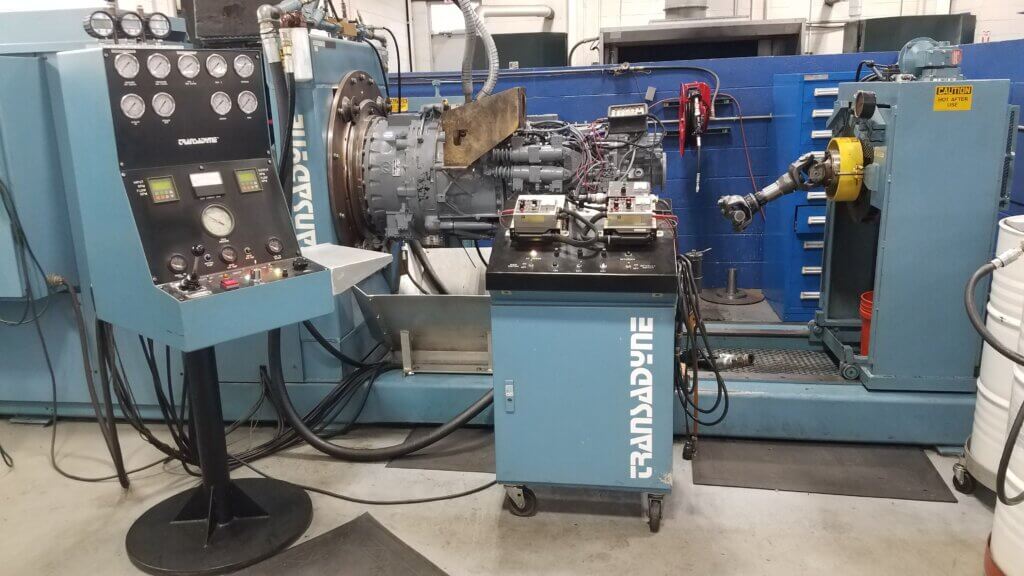
When your transmission has been rebuilt or repaired, you want peace of mind that it’s going to work flawlessly the moment you hit the road. The last thing anyone wants is to go through the hassle of a repair, only to find out the issue isn’t fully fixed. That’s where dynamometer testing after transmission repair plays a crucial role.
Think of it like a test drive — but without ever leaving the shop. Instead of putting the freshly repaired transmission back into a truck or heavy-duty vehicle and hoping for the best, dynamometer testing simulates real-world driving conditions in a controlled environment. It gives technicians the chance to verify shifting, performance, pressure levels, and overall functionality before any road testing even begins.
How Dynamometer Testing Is Performed After Transmission Repair
When a heavy-duty transmission is rebuilt or repaired, it’s not enough to just bolt it back into the truck and send it on its way. There’s too much at stake — downtime, money, safety, and performance. That’s why dynamometer testing after transmission repair is such a vital step in the process. It allows the transmission to be tested under real-world conditions, without ever putting it into a vehicle.
So, how does it actually work?
Think of It Like a Treadmill for Transmissions
A transmission dynamometer — or “dyno” for short — is a machine that simulates the load and stress a transmission would experience during actual driving. Imagine putting your transmission on a treadmill. The dyno spins the input shaft, applies torque, and creates resistance, just like the transmission would feel during acceleration, cruising, and shifting on the road.
At Precision Transmission, our dyno testing stations are calibrated to replicate a wide variety of driving conditions. That means we can simulate hills, heavy loads, and long hauls — without ever turning a wheel on the pavement.
Step-by-Step: What Happens During Transmission Dyno Testing
Here’s how the process usually goes after a repair:
- Mounting the Transmission to the Dyno
Once a transmission is rebuilt, it’s securely mounted to the dyno machine using adapters that match the specific transmission type. This setup ensures a tight fit and stable operation during testing. - Adding Fluids and Initial Checks
Fluids are added just like they would be in the truck. Technicians also do a first-round inspection to check for leaks, electrical connections, and initial pressure readings. - Running the Test Program
The dyno is programmed to run the transmission through various cycles — starting, idling, accelerating, shifting, and decelerating — all while under load. Think of it as putting the transmission through a full workout. It’s not just spinning it for fun; it’s being tested with resistance, like towing up a hill or merging onto a highway. - Monitoring Live Data
During the test, technicians monitor vital data in real time. They’re watching line pressure, clutch timing, shift quality, fluid temperatures, and any potential faults or codes. If something’s off — even slightly — it gets flagged. - Troubleshooting and Adjustments
If the transmission shows signs of slipping, delayed shifts, or overheating, it doesn’t pass. At that point, the unit is removed and brought back to the bench for corrections. Nothing moves forward until it meets our exact standards. - Final Verification
Once a transmission performs flawlessly on the dyno, it’s ready to move on to installation and optional road testing. By this point, most bugs or hidden problems have already been caught.
Why Is This Better Than Skipping Straight to the Truck?
Without dynamometer testing after transmission repair, problems might not show up until the truck is already back in service — which can lead to breakdowns, expensive towing, and frustrated customers. The dyno lets us catch issues early, before they become real-world failures.
Identifying Post-Repair Transmission Issues Before Road Testing
Catching problems early is everything when it comes to transmission work. A freshly rebuilt or repaired transmission might look perfect on the outside — clean, sealed, painted — but what’s happening on the inside is what really counts. That’s where dynamometer testing after transmission repair makes a huge difference. It acts like a lie detector for the transmission, revealing hidden issues before the truck ever rolls out of the shop.
Why Road Testing Alone Isn’t Enough
Picture this: a truck comes in with a failing transmission, the repair is done, the unit is reinstalled, and the shop takes it for a road test. Sounds standard, right? But what if the technician only drives it around the block or puts it under light load? There’s a lot that can go undetected in a short, low-stress drive.
Transmission dyno testing goes beyond what a basic road test can reveal. On the dyno, the transmission is pushed — safely — through a full range of speeds, shifts, and torque loads. And because the environment is controlled, technicians can pinpoint irregularities without the variables of traffic, road conditions, or unpredictable driving.
What Issues Can Be Caught Before Hitting the Road?
Dynamometer testing isn’t just for show — it’s a diagnostic powerhouse. Here are a few common problems it can uncover:
- Shift Timing Problems
Delayed or early shifts might not be obvious during a short road test, but they can cause major performance issues and driver frustration on longer hauls.
- Low Line Pressure
A drop in pressure can lead to clutch slippage or poor gear engagement — signs that something inside the valve body or pump isn’t quite right.
- Torque Converter Issues
If the torque converter isn’t locking up properly or causes vibration, it’ll show up on the dyno before it becomes a drivability complaint.
- Overheating
A transmission that runs hot under load will reveal that during dyno testing. This could point to cooler flow issues or internal friction.
- Electronic Control Faults
Today’s transmissions are as much electrical as they are mechanical. Dyno testing allows for scanning codes and checking sensor responses during simulated driving conditions.
At Precision Transmission, we believe testing is part of the repair, not an optional add-on. We use this approach at both our Fort Myers, FL and Colmar, PA facilities to ensure every unit is road-ready from the first ignition turn.
Which Heavy-Duty Transmissions Can Be Tested on a Dynamometer
Not all transmissions are built the same — and not all shops are equipped to handle the full range of models that come through their doors. At Precision Transmission, we’ve invested in advanced dynamometer testing after transmission repair so we can confidently test a wide variety of heavy-duty and medium-duty transmissions. This isn’t just about checking boxes — it’s about delivering consistent, road-ready results for our customers, no matter what they drive.
From Box Trucks to Big Rigs — We Test Them All
Whether it’s a delivery fleet vehicle or a long-haul semi, most heavy-duty transmissions can (and should) go through transmission dyno testing before being reinstalled. This includes both automatic and automated manual transmissions.
Here are just a few of the common transmission models we regularly dyno test:
- Allison 1000/2000/3000/4000 Series
These are some of the most widely used automatic transmissions in commercial trucks, buses, and vocational vehicles. Our dyno can simulate real-world torque loads to ensure these units shift smoothly and deliver the expected power.
- Eaton Fuller Automated Manual Transmissions (AMTs)
For fleets using AMTs, getting the electronics and shift calibration just right is critical. The dyno helps us test clutch actuation, gear engagement, and electronic shifting without risking in-service failure.
- ZF and Voith Transmissions
Found in many buses and European heavy-duty applications, these require specialized adapters — which we have — to properly test and validate performance.
- Detroit DT12 and Volvo I-Shift
These newer transmission models are complex and computer-controlled. Our dyno setup allows for live communication with the TCU (Transmission Control Unit) during testing, helping us catch any software or shift map issues before the unit goes back in service.
- Off-Road and Specialty Equipment Transmissions
Some of our customers operate in industries like mining, agriculture, and construction. These transmissions face extreme loads and long hours — making dyno testing even more important before reinstallation.
Why Compatibility Matters
Not every shop can test every model. It requires the right adapters, software interfaces, and technical expertise. At Precision Transmission, we’ve built our dyno capabilities to cover a wide range of units because we know our customers depend on their equipment running smoothly the first time — and every time after that.
We often get calls from fleet managers who were told their transmission “can’t be tested” until it’s in the truck. But in many cases, the right equipment can test that unit — the shop just might not have the tools. That’s the difference between guessing and guaranteeing.
Dynamometer Testing vs Road Testing After Transmission Repair
Let’s be honest — road testing has been the go-to method for verifying transmission repairs for decades. And while it still plays a role, it’s no longer the only (or best) option when precision and reliability are the priority.
Dynamometer testing after transmission repair doesn’t replace the road test in every case — but it gives us something better: consistency. It takes the guesswork and variability out of post-repair diagnostics and provides hard data, not just seat-of-the-pants feedback.
Let’s break it down side by side:
Transmission Testing Comparison Table
Feature / Factor | Dynamometer Testing | Road Testing |
Controlled Environment | Yes – Simulated loads and speeds in a shop setting | No – Road conditions vary with traffic, terrain, and weather |
Safety | High – No risk of vehicle breakdown on the road | Medium – Potential for roadside failures if repair isn’t perfect |
Repeatability | Yes – Same conditions every time | No – Each road test is different |
Data Monitoring | Real-time, with live feedback on pressure, temps, shifts | Limited – Often relies on feel or general behavior |
Issue Detection Under Load | Yes – Full torque and heat simulations | Depends – Might not see full load scenarios during short drive |
Testing Without Reinstalling in Vehicle | Yes – Standalone testing on the bench | No – Must reinstall into vehicle first |
Diagnostic Capabilities | Advanced – Integrates with electronics and sensors | Limited – Less visibility into internal systems |
Time Efficiency | High – No need for install/uninstall just to test | Low – Requires full reassembly to begin testing |
Cost of Identifying Issues Early | Lower – Problems found before install | Higher – Fixes after install mean double labor |
Peace of Mind for the Customer | Maximum – Proven under stress before hitting the road | Moderate – May still have hidden issues |
For Shops That Skip the Dyno? It’s a Gamble.
Skipping dynamometer testing after transmission repair is like skipping the final exam after cramming for a test — you might pass, or you might fail. At Precision Transmission, we don’t take that chance, and we don’t ask our customers to either.
Choose Precision Transmission for Reliable Repairs
If you’ve ever dealt with a comeback, a breakdown, or a transmission that “should’ve worked,” you already know how costly guessing can be. That’s why dynamometer testing after transmission repair isn’t just a smart move — it’s an essential one. It’s how you turn a repair into a guarantee.
At Precision Transmission, we don’t believe in shortcuts. Our technicians don’t just rebuild transmissions — they test them thoroughly using advanced transmission dyno testing equipment designed to simulate real-world conditions under real stress. Whether you’re running a single work truck or managing an entire fleet, we make sure your transmission is road-ready before it ever leaves our shop.
Two Locations. One Standard of Excellence.
Wherever you’re located, we’ve got you covered with state-of-the-art testing and top-tier service.
Colmar, PA
Call: 215-822-8300
Serving the Northeast with expert heavy-duty transmission repair, rebuilds, and full dyno testing capabilities.
Fort Myers, FL
Call: 888-343-8912
Trusted by fleets and independent operators across Florida and the Southeast.
We specialize in major transmissions brands like Allison, Eaton, ZF, and more. And we’re equipped to test nearly every transmission we build — no guesswork, no delays, and no do-overs. Whether you’re dealing with a complex failure or just want to make sure your rebuild holds strong, give us a call. Let Precision Transmission show you how dynamometer testing after transmission repair can protect your investment — and your time.