
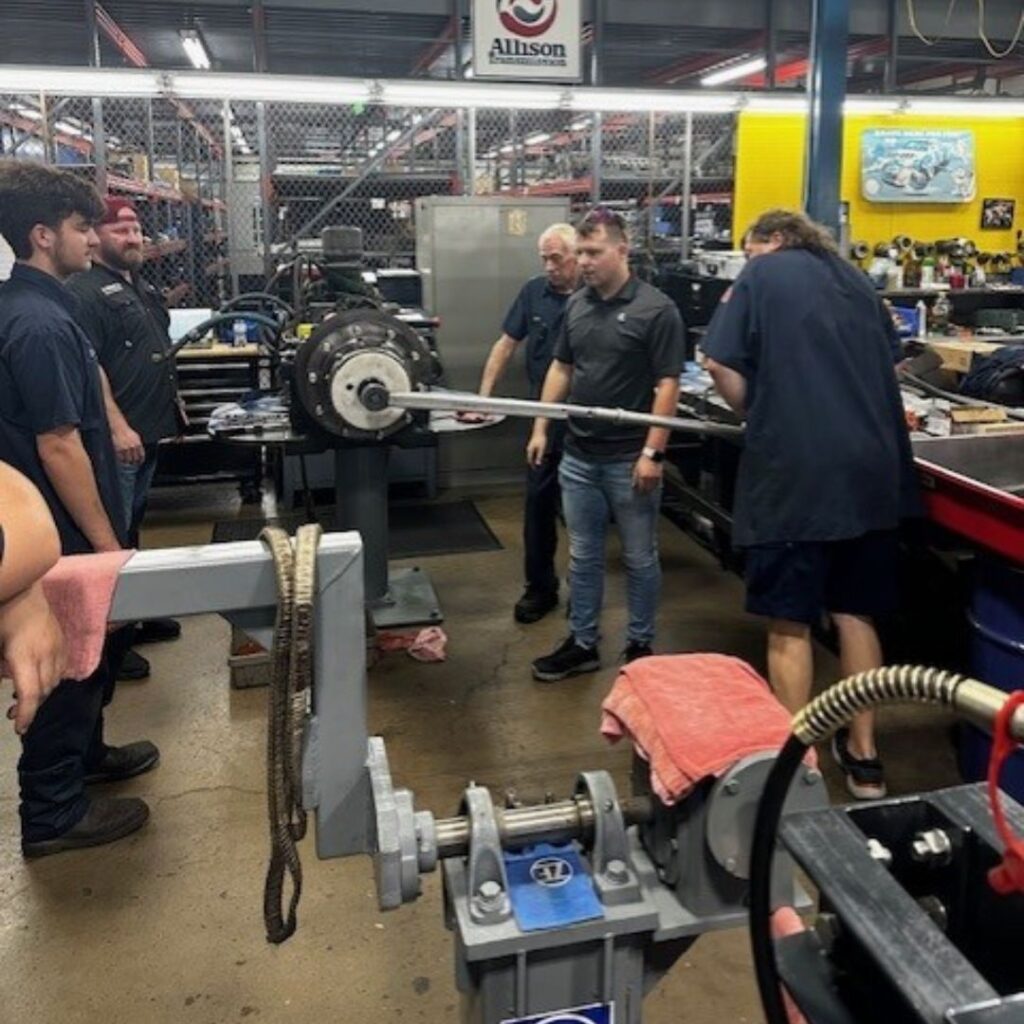
A burning smell from a heavy-duty transmission is never something to brush off. On a job site or in a fleet operation, that odor is a signal — and ignoring it can turn a manageable repair into a full transmission failure. Whether you’re running construction equipment, a motorcoach, or a material handling fleet, your transmission is one of the most load-bearing components on the machine. When something’s wrong, it tells you. The question is whether you know how to listen. In this article, we’ll walk through what causes that burning smell, how to tell the difference between failure modes, and what your next move should be.
What Does a Burning Smell From a Heavy-Duty Transmission Mean?
A burning smell from a heavy-duty transmission typically means heat is building up somewhere it shouldn’t be. In heavy-duty applications — construction equipment, buses, forklifts, rail — transmissions operate under sustained load and high torque demands. When something breaks down in that system, whether it’s the fluid, the clutch packs, or the cooler, heat is usually the first symptom and a burning smell is how it announces itself. It’s not always catastrophic right away, but it’s always worth investigating immediately. The longer the equipment keeps running, the more damage compounds.
Common Causes of a Burning Smell in Heavy-Duty Transmissions
There’s no single reason a heavy-duty transmission starts smelling like it’s burning. Here are the five most common culprits.
Overheated Transmission Fluid
Transmission fluid is your first line of defense against heat. It lubricates, cools, and protects internal components under load. When fluid temperature climbs beyond its operating range — typically above 200°F for most heavy-duty applications — it begins to break down chemically, losing viscosity and releasing that characteristic burnt odor. Heavy-duty transmission overheating is often the root cause here, and it tends to happen under conditions of sustained high load, inadequate cooling, or extended operation without proper fluid maintenance intervals.
Worn or Slipping Clutch Packs
Clutch packs are designed to engage and release cleanly. When they wear down or begin slipping — either from age, contamination, or excessive load cycling — the friction generates heat fast. That heat burns the clutch material itself, producing a sharp, acrid smell that’s distinct from burnt fluid. Slipping clutch packs are a serious mechanical issue that won’t resolve on their own. If you’re noticing delayed shifts alongside the smell, this is a likely cause.
Low or Contaminated Fluid
Running low on fluid means less lubrication between moving parts and less capacity to absorb and transfer heat away from critical components. Contaminated fluid — whether from water intrusion, metal particles, or the wrong fluid type — is equally damaging. It loses its protective properties and can accelerate wear across the entire gear train. Either condition puts the transmission at risk of heavy-duty transmission overheating and will produce a burning smell as internal temperatures rise.
Blocked Transmission Cooler
The transmission cooler keeps fluid temperatures in check during operation. When it gets clogged — from debris, scale buildup, or a collapsed line — heat has nowhere to go. Fluid recirculates without being cooled, temperatures spike, and the burning smell follows. This is one of the more overlooked causes, especially on equipment that operates in dirty or high-debris environments.
Internal Component Failure
Bearing failures, damaged gear sets, or a failing torque converter can all generate abnormal heat and friction deep inside the transmission. In these cases the burning smell from a heavy-duty transmission is often accompanied by noise — grinding, whining, or erratic shifting. Internal failures are the most serious on this list and typically require a full teardown and inspection to properly diagnose.
Burning Smell vs. Other Transmission Smells — How to Tell the Difference
Not every smell coming from your drivetrain is a transmission problem. Knowing how to distinguish between odors can save you diagnostic time and help you point your technician in the right direction before the equipment even comes in.
Burnt Transmission Fluid
Has a sharp, acrid smell — similar to burnt rubber or singed plastic. It’s consistent and tends to get stronger as the equipment warms up under load. This is the most common indicator of a burning smell from a heavy-duty transmission and usually points to overheating fluid, a blocked cooler, or low fluid levels.
Burning Clutch Material
Smells closer to burnt paper or a matchbook — dry and sharp. It tends to spike during gear engagement and fade slightly when the transmission is in a steady state. If the smell is most noticeable during shifts, clutch packs are the first place to look.
Gear Oil From Axles Or Differentials
Has a sulfuric, rotten-egg quality that’s hard to confuse with transmission fluid. If that’s what you’re picking up, the transmission may not be the issue at all — check the axles and differential seals first.
Engine Oil Burning
Produces a thicker, heavier smoke smell and is often accompanied by visible smoke from the engine bay. If the smell is coming from above the transmission rather than below or around it, rule out an engine oil leak onto hot exhaust components before assuming it’s the transmission.
Coolant Leaks
Smell sweet — almost syrupy. If coolant is somehow entering the transmission (a failure mode seen with certain integrated cooler designs), you’ll get a sweet-burning combination that’s distinct from straight fluid burn.
When in doubt, note when the smell appears — at startup, under load, during shifts, or after shutdown — and where it seems to be coming from. That information is exactly what a transmission specialist needs to start narrowing it down.
How to Diagnose the Problem on the Spot
A burning smell from a heavy-duty transmission warrants an immediate, systematic check before the equipment moves another foot. You’re not trying to rebuild it in the field — you’re trying to gather enough information to make a safe call on whether to keep operating or shut it down. Here’s where to start.
Visual Inspection Checklist
Work through these before anything else:
- Check for leaks. Look under the transmission and around the pan, seals, and cooler lines. Fresh fluid on the ground or on the housing is a red flag.
- Inspect the cooler lines. Look for kinks, cracks, or signs of blockage. A collapsed line can cut off cooling entirely.
- Look at the transmission pan. If it’s accessible, check for discoloration or warping from excessive heat.
- Check the cooler itself. Look for debris buildup, bent fins, or obvious blockage — especially on equipment that runs in high-debris environments.
- Note any external damage. Impact damage to the housing or cooler can cause issues that aren’t immediately obvious until heat builds up under load.
Document what you find. Even a quick phone photo of a leak pattern or a damaged line gives a technician useful context before the unit comes in.
When to Check Fluid Condition and Color
Pull the dipstick or sample the fluid if your equipment allows for it. Healthy transmission fluid is typically red or light amber and has a clean, slightly sweet smell. Here’s what abnormal fluid is telling you:
- Dark brown or black fluid indicates oxidation and thermal breakdown — the fluid has been running too hot for too long.
- Milky or foamy fluid points to water or coolant contamination, which is a serious condition requiring immediate attention.
- Metal particles or grit in the fluid signal internal component wear — bearings, gears, or clutch material breaking down inside the unit.
- Burnt smell from the fluid itself confirms that heavy-duty transmission overheating has already occurred, not just that it’s at risk.
If the fluid is dark, contaminated, or smells burnt, do not continue operating the equipment. At that point you’re not preventing damage — you’re adding to it.
You’re right! Here are 4 FAQ questions following the brand template — each as an H3, concise, technically accurate, and covering angles not already addressed in the body:
Frequently Asked Questions
Can Low Transmission Fluid Cause A Burning Smell?
Yes. Low fluid means less lubrication between moving components and reduced capacity to absorb and dissipate heat. As internal temperatures rise, the remaining fluid begins to break down and burn. Check fluid level and condition immediately if you detect a burning smell — and if the level is low, don’t just top it off without investigating where the fluid went.
How Hot Is Too Hot For A Heavy-Duty Transmission?
Most heavy-duty transmissions are designed to operate within a fluid temperature range of 175°F–200°F under normal conditions. According to Allison Transmission’s operator documentation, fluid temperatures consistently above 250°F accelerate oxidation and significantly shorten fluid and component life. If your equipment has a transmission temperature gauge, treat anything sustained above 200°F as a warning condition worth investigating.
Can A Burning Smell Go Away On Its Own?
Not reliably. A faint smell that disappears after a short cool-down period may suggest early-stage fluid degradation or a cooler running at reduced efficiency — but the underlying condition doesn’t self-correct. If the smell returns under load, the problem is progressing. Don’t wait for it to get worse before pulling the equipment for an inspection.
What’s The Difference Between A Transmission Rebuild And A Remanufactured Oem Unit?
A rebuild addresses the specific failed components in your existing unit — worn clutch packs, damaged bearings, failed seals — while keeping the original housing and core assembly intact. A remanufactured OEM unit is a completely overhauled transmission built to original factory specifications, with all wear items replaced, verified on a dynamometer, and backed by a warranty. At Precision Transmission, we offer both paths depending on the condition of your unit and your operational timeline.
When to Call a Heavy Duty Transmission Specialist
Some transmission issues can be addressed in-house by a experienced shop foreman or fleet mechanic — a fluid change, a cooler flush, a line replacement. But a burning smell from a heavy-duty transmission that can’t be traced to a simple, external cause needs a specialist. Here’s when to make the call.
Call a specialist when:
- The fluid is burnt, contaminated, or showing metal particles
- The smell persists after a fluid change and cooler inspection
- You’re seeing slipping, erratic shifting, or delayed engagement alongside the smell
- The equipment has logged significant hours since its last transmission service
- You suspect internal component failure — bearing noise, grinding, or a torque converter issue
- The unit has already overheated once and you want a proper assessment before putting it back in service
Heavy-duty transmission overheating that has gone unaddressed long enough to burn the fluid or damage clutch packs is not a fluid-and-filter job. It requires a full inspection, and in many cases a teardown, to assess how far the damage has progressed and what the correct repair path looks like.
At Precision Transmission, our team has been diagnosing and rebuilding heavy-duty transmissions for over 40 years across construction, bus, rail, and material handling equipment. We work on units that other shops won’t touch — ZF, Allison, Dana, Twin Disc, Carraro, Clark, and more. When a unit comes in with a burn complaint, we don’t guess. We run a full diagnostic, inspect the fluid, evaluate the clutch packs and gear train, and give you a straight answer on what the repair path looks like and what it will take to get the equipment back in service.
If the damage has gone deep enough that components need to be replaced, we also offer remanufactured OEM transmissions — built to factory specifications, verified on one of our three in-house dynamometers, and backed by a standard 1-year warranty with unlimited hours. If your transmission has reached the point where a rebuild isn’t the right call, a reman unit gets you back in service faster than waiting on new iron, without compromising on quality or reliability.
To talk with our team about a diagnosis, repair, or reman unit, reach out through our contact page. We’ll route you to the right specialist at our Colmar, PA or Fort Myers, FL facility — whichever works best for your operation.