
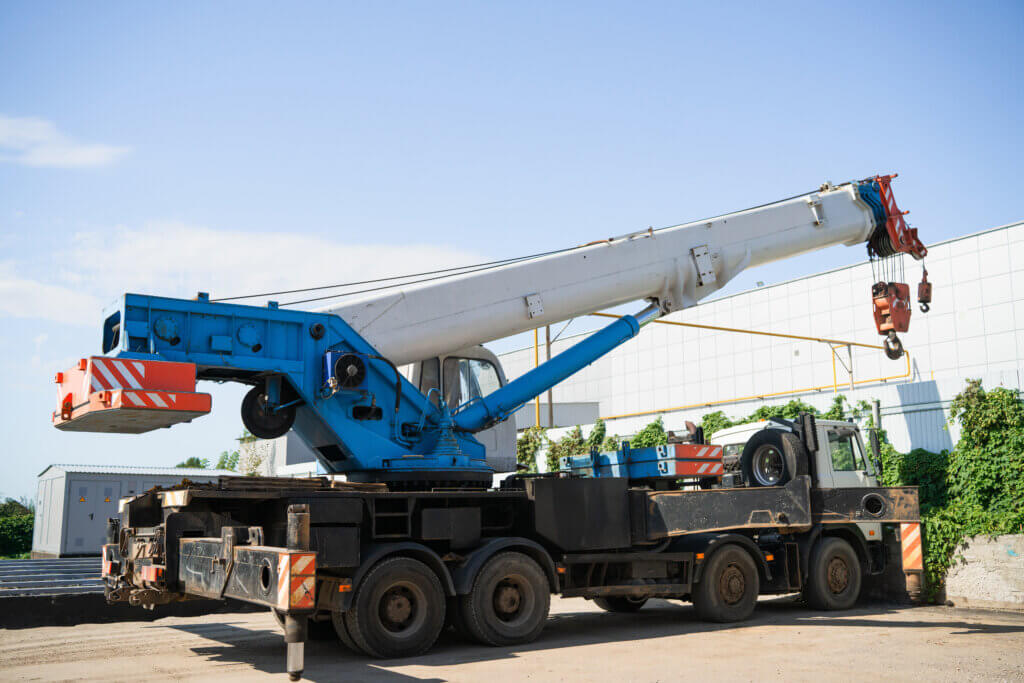
A transmission failure on an off-highway machine doesn’t just stop one piece of equipment — it stalls a haul cycle, a lift schedule, or a paving crew until the unit is back in service. When a crane, wheel loader, or articulated hauler goes down, every hour on the ground costs money in idle labor and missed production targets. Rebuild services for off-highway transmissions give fleet managers a way to restore a failed unit to factory-spec performance without the lead time or cost of sourcing a brand-new transmission. This article covers what makes off-highway duty cycles hard on a transmission, the failure modes that typically send a unit in for rebuild, how to decide between repair, rebuild, and remanufactured replacement, and what ongoing maintenance looks like once the unit is back in the field.
Why Off-Highway Duty Cycles Are Harder on a Transmission
Off-highway transmissions work under conditions that on-highway units rarely see: sustained high-torque loads at low ground speed, constant directional shifting (forward-reverse-forward) in loader and crane applications, and extended operation at high oil temperatures with limited airflow for cooling. A powershift transmission built for a wheel loader is engineered to handle thousands of forward/reverse cycles a day under full load — something an on-highway automatic was never designed for. That constant shifting under load accelerates wear on clutch packs and control valves far faster than typical highway duty, which is exactly why these units need rebuild services on a shorter interval than most operators expect going in.
Rebuild Services for Off-Highway Transmissions: Common Failure Modes
Most units that come in for rebuild show one of a handful of recurring failure patterns. Recognizing which one you’re dealing with early — before it cascades into secondary damage — is what keeps a rebuild affordable instead of turning into a full core replacement.
Clutch Pack Wear and Delayed Gear Engagement
Repeated high-load directional shifting wears clutch pack friction material faster than in on-highway service. The result is delayed engagement, slipping under load, or a harsh clunk when shifting between forward and reverse. Left unaddressed, worn clutch packs generate metal debris that migrates through the hydraulic circuit and damages valve bodies and pump components.
Torque Converter Damage from Contaminated Fluid
Off-highway equipment operates in dusty, high-vibration environments where fluid contamination is common — through worn seals, infrequent filter changes, or breather issues. Contaminated fluid accelerates torque converter wear, causes stator or turbine damage, and shows up as overheating, shuddering under load, or a noticeable loss of power at the drawbar.
Control Valve and TCU Fault Codes
Modern powershift and electronically controlled units (including ZF’s Ecomat and Ecolife lines) rely on a transmission control unit (TCU) reading pressure and speed sensors to manage shift quality. Fault codes tied to solenoid resistance, pressure sensor drift, or intermittent wiring often point to a control valve body issue rather than a mechanical failure — and diagnosing that correctly up front avoids tearing into a unit unnecessarily.
Transmission Repair, Rebuild, or Remanufactured Replacement: Making the Right Call
The right path depends on how contained the damage is. A repair makes sense when the issue is isolated and confirmed — a single solenoid, a seal, a sensor — and the rest of the internals test out clean. A full rebuild is the right call when clutch packs are worn, bearings are degraded, or the unit has a documented history of contamination or overheating that likely affected multiple components, even if the housing and case are still sound.
A remanufactured off-highway transmission exchange unit becomes the better option when the core is too far gone to justify a rebuild — severe gear damage, a cracked case, or a unit that’s been run dry. Remanufactured units are fully disassembled, every wear part is replaced, and the unit is tested to factory spec before it ships, which gives a stronger reliability-to-value tradeoff than a rebuild-only approach that just swaps the failed part with limited testing. New OEM replacement is really only worth the full factory cost and lead time when the equipment is still under manufacturer warranty or a contract specifically requires OEM-only parts.
Brands We Service for Off-Highway Transmission Rebuilds
As a ZF Off-Highway distributor, we work constantly with the Ecomat, Ecolife, Traxon, and TC Tronic lines, along with the 4WG98 series common in wheel loaders and compactors — giving us OEM-level parts access and technical documentation that a general rebuild shop doesn’t have. Beyond ZF, off-highway rebuild work regularly comes through on Dana/Spicer transmissions, Funk transmissions used in aggregate and construction equipment, Liebherr units, Carraro transmissions and axles common in compact wheel loaders, and Twin-Disc and AxleTech components in crane and specialty equipment applications. For heavy-duty transmission rebuild work specifically, matching the rebuild process to the manufacturer’s original tolerances and control logic — not a generic procedure — is what determines whether the unit performs like new or just runs. If your fleet runs construction or crane equipment, our construction equipment services and crane transmission services outline the specific units we support in those categories.
Maintenance That Reduces the Need for Off-Highway Transmission Repair
Most rebuild trips back to the shop can be pushed out significantly with a few consistent practices:
- Fluid and filter changes on schedule. Off-highway service sees more dust and contamination exposure than on-highway, so sticking to the manufacturer’s recommended interval matters more here, not less.
- Cooler line and cooler core inspection at every service interval. Restricted cooling is one of the most common root causes behind torque converter and clutch pack damage.
- Address fault codes as soon as they appear. An intermittent sensor fault today is a control valve replacement in three months if it’s ignored.
- Check fluid immediately after any contamination event — standing water, extreme dust exposure, or a seal failure — rather than waiting for the next scheduled interval, since contamination compounds fast in these environments.
Frequently Asked Questions
How do I know if my off-highway transmission needs a rebuild or just a repair?
If the issue traces back to a single confirmed component — a sensor, a seal, a solenoid — and diagnostics show no secondary damage, a targeted repair is usually enough. If there’s evidence of clutch pack wear, contamination history, or multiple fault codes across different systems, a full rebuild addresses the underlying wear instead of just the symptom that surfaced first.
Is a remanufactured off-highway transmission as reliable as a rebuilt one?
A remanufactured unit typically offers stronger reliability because every wear component is replaced as a standard part of the process and the unit is load-tested to factory spec before it ships — versus a rebuild, which restores the specific worn components identified during teardown. Both are viable depending on the condition of your core.
How long does an off-highway transmission rebuild typically take?
Turnaround depends on the extent of the damage and parts availability for that specific make and model. Where we have a matching exchange unit in our core inventory, exchange transmissions can often be built in 3-5 days — for other units, contact us to confirm availability for your specific application.
What brands do you provide rebuild services for on off-highway equipment?
We work extensively with ZF Off-Highway (Ecomat, Ecolife, Traxon, TC Tronic, 4WG98), Dana/Spicer, Funk, Liebherr, Carraro, Twin-Disc, and AxleTech transmissions across construction, crane, and material handling equipment.
Get Your Off-Highway Transmission Back in Service
A transmission that’s misdiagnosed gets rebuilt twice — once for the wrong problem, once for the real one. That’s the gap our diagnostics and three in-house dynamometers close: every unit that leaves our shop has been tested under load against factory spec, not just reassembled and sent back out. Combined with our standing as a ZF Off-Highway distributor, that means the rebuild is matched to how the unit is actually supposed to perform, not a generic procedure.
Tell us the unit, what it’s doing (or not doing), and your timeline, and we’ll get you to the right specialist. Contact us through our contact page, or call us at Colmar, PA (215-822-8300) or Fort Myers, FL (888-343-8912).