
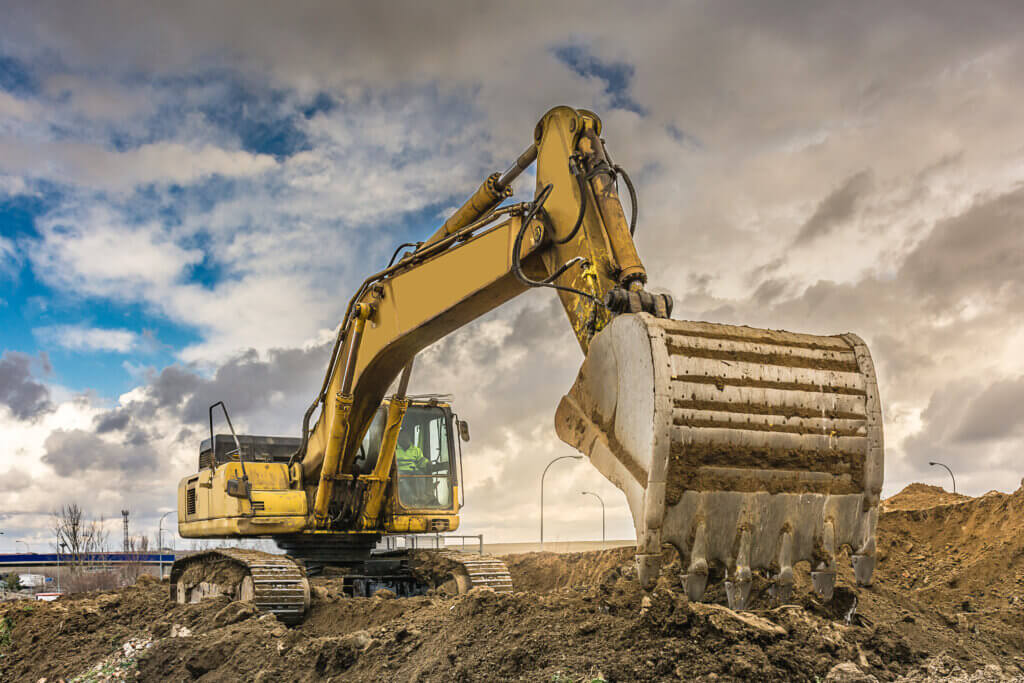
A stalled excavator on a job site isn’t just an inconvenience — it’s a crew standing around, a schedule slipping, and every other piece of equipment staged around it sitting idle too. More often than operators expect, the cause traces back to the excavator transmission rather than the engine: a hydrostatic pump losing pressure, a powershift clutch pack slipping, or a direct-drive gear train that’s finally worn past tolerance.
Excavators put different demands on a transmission than wheeled equipment does — high torque at low travel speeds, constant load changes from digging and swinging, and long duty cycles with the machine parked and working in one spot for hours at a time. That combination wears components differently than a truck or loader transmission, and the warning signs look different too.
How Excavator Duty Cycles Stress a Transmission
An excavator transmission is built to move torque, not speed. Unlike a truck transmission tuned for highway RPM ranges, an excavator’s drive system is optimized for low-speed, high-torque output — enough force to swing a loaded bucket or climb a grade with a full load, without needing more than a few miles per hour of travel speed.
That priority shapes which components fail first. Hydraulic and hydrostatic transmission systems run under sustained high pressure rather than brief bursts, which accelerates seal and hose wear. Powershift clutch packs cycle constantly under load rather than shifting occasionally at speed, so they wear out from repeated engagement rather than mileage. And because excavators often sit and work in one spot for extended periods, heat has fewer chances to dissipate the way it would on a machine that’s actually moving down a road.
Hydrostatic, Powershift, and Direct-Drive Systems in Excavators
Most modern excavators run a hydrostatic excavator transmission — hydraulic fluid and a pump/motor circuit replace the mechanical gearset entirely, which is what gives an excavator its smooth, variable-speed control and high torque at any speed. The tradeoff is that hydrostatic systems generate significant heat and are maintenance-intensive: fluid condition, hose integrity, and seal wear all directly affect performance in a way they don’t on a gear-based system.
Powershift transmissions use a gear-based design that allows shifts under load without disengaging power — common on larger excavators and equipment that needs to maintain torque through a shift. They’re durable and efficient but rely on clutch packs that wear with use, and repairs are more involved when something goes wrong internally.
Direct-drive systems connect the engine to the drivetrain mechanically, without hydraulic mediation. They’re simpler and lower-maintenance but offer less operating flexibility and a rougher ride under variable load — less common on modern excavators but still found on some older or smaller machines.
Common Excavator Transmission Problems
Most problems in these systems show up as one of five patterns. Catching them early is almost always the difference between a repair and a full rebuild.
Slipping or Delayed Gear Engagement
The machine hesitates or struggles to hold a gear engaged, especially under load. On a powershift unit this usually points to worn clutch packs; on a hydrostatic system it’s more often a sign of internal pump or motor wear reducing hydraulic pressure.
Hydrostatic Pump and Motor Overheating
Running hotter than normal during normal duty cycles is one of the clearest hydrostatic-specific warning signs. It’s typically caused by low or degraded fluid, a restricted cooler line, or internal pump wear — and it compounds quickly, since heat accelerates seal and fluid breakdown once it starts.
Grinding, Whining, or Clunking Noise
Unusual noise during travel or swing almost always means something mechanical has already worn past normal tolerance — a damaged gear tooth, worn bearing, or failing pump component. Noise that changes with load or direction narrows down which component is involved.
Fluid Leaks and Contamination
Visible fluid under the machine, or fluid that’s discolored, milky, or gritty, points to a seal or hose failure — or, in the case of contamination, to water or debris intrusion that will accelerate wear on every downstream component if it isn’t caught.
Warning Lights and Fault Codes
On excavators with onboard diagnostics, transmission-related fault codes are often the earliest available warning, sometimes appearing before the operator notices any change in how the machine handles. Codes should be logged and taken seriously even if performance still feels normal.
Transmission Repair, Rebuild, or Replace: Making the Right Call
Once you’ve confirmed a problem, the decision comes down to how contained the damage is. A straightforward excavator transmission repair — a seal, a hose, a sensor — makes sense when the issue is isolated and the rest of the unit tested sound. A full rebuild is the right call for worn clutch packs, degraded bearings, or a history of contamination or overheating that’s likely affected multiple internal components, even if the housing itself is still good.
Replacement with a remanufactured excavator transmission is the better option once a core is too far gone to justify rebuilding — severe gear damage, a cracked housing, or a unit that’s been run dry long enough to score internal surfaces. A remanufactured unit is fully disassembled, every wear component replaced, and tested to factory spec before it goes back into service, which gives you a known-condition transmission rather than a repaired unknown. New OEM is worth considering mainly when the equipment is still under manufacturer warranty or a contract specifies OEM-only parts; otherwise it comes at full factory cost and lead time for the same coverage a remanufactured exchange unit already provides.
How to Extend the Life of an Excavator’s Transmission
Fluid condition drives most of a transmission’s service life on an excavator, especially on hydrostatic systems. Change fluid and filters on the manufacturer’s interval — not just when it looks dirty — and pull a fluid sample periodically if the machine runs long hours; contamination is often detectable before it causes a symptom you’d notice from the cab. Inspect hoses, fittings, and seals on a regular walk-around, since a small hydraulic leak found early is a hose replacement, and the same leak ignored is a contamination-driven rebuild.
Keep cooler lines and radiators clear of debris — packed mud or debris around a cooler is one of the most common, most preventable causes of hydrostatic overheating on job sites. Log and address fault codes as soon as they appear rather than waiting for a performance change, and make sure operators know to report noise, hesitation, or handling changes immediately rather than working through them.
Frequently Asked Questions
How do I know if it’s the transmission or the final drive?
Transmission problems typically show up as slipping, hesitation, or noise tied to engaging power — often across both travel and swing. Final drive issues usually isolate to one track, showing up as uneven travel speed, noise from a single side, or a leak localized at the drive housing rather than the main transmission or pump. If you’re not sure which component is involved, describe the symptoms and we can help narrow it down before you commit to a repair.
What type of transmission does my excavator use?
Most modern excavators run a hydrostatic transmission, but some larger or older machines use a powershift or direct-drive system instead. The type affects both the failure modes to watch for and the repair approach, so it’s worth confirming your make and model with us rather than assuming.
Should I repair, rebuild, or replace a failing excavator transmission?
It depends on how contained the damage is. An isolated issue — a seal, a hose, a single component — is usually a repair. Worn clutch packs, bearing wear, or a history of overheating or contamination generally call for a full rebuild. Severe internal damage or a cracked housing is where a remanufactured exchange unit becomes the better value.
How long does excavator transmission repair take?
It depends on the extent of the damage and the unit involved. For units where we can build from core inventory, remanufactured exchange transmissions are often ready in 3-5 days. Contact us with your make, model, and symptoms and we’ll confirm realistic timing for your specific unit.
Excavator Repair and Remanufacturing at Precision Transmission
We’ve been remanufacturing and repairing heavy-duty and off-highway transmissions for more than 40 years, and every remanufactured unit is load-tested on one of our three in-house dynamometers before it ships — so what goes back on your excavator has been verified under load, not just reassembled. As a ZF Off-Highway distributor, we also carry OEM-level parts and documentation access for ZF’s off-highway lines specifically.
If your excavator transmission is slipping, running hot, or throwing fault codes, don’t wait for the next dig to make it worse. Reach out through our contact page and describe what the machine is doing — we’ll help you sort out whether it’s a repair, a rebuild, or time for a remanufactured exchange unit. Our Colmar, PA (215-822-8300) and Fort Myers, FL (888-343-8912) facilities are both equipped to take on the work.