
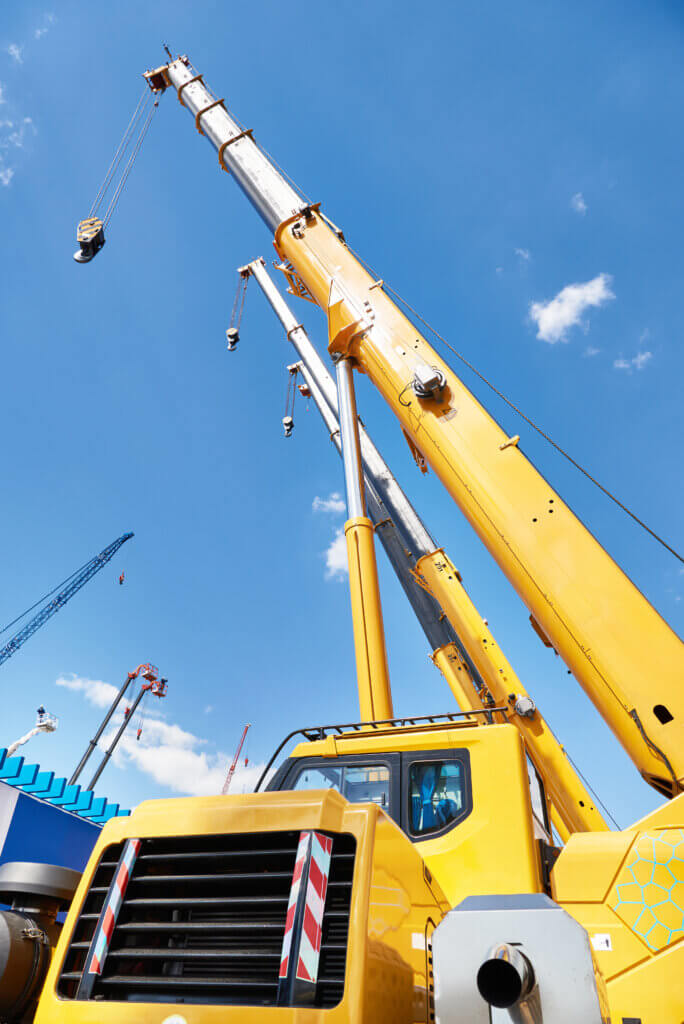
When you’re dealing with a broken transmission housing in cranes, you’re not just looking at a piece of cracked metal — you’re facing a serious operational and safety issue. Cranes rely on the transmission housing to contain and support the internal gearing system that delivers torque and power. When this casing cracks, splits, or warps, the entire drivetrain is at risk of catastrophic failure.
The first thing most operators notice is a sudden change in performance. Maybe the crane hesitates under load. Maybe it won’t shift correctly. In some cases, you’ll hear metallic grinding or feel a deep vibration through the controls. These are signs the transmission internals are moving or misaligned — often because the housing has failed to keep everything tight and in place.
One of the most dangerous parts of a broken transmission housing in cranes is that the symptoms don’t always show up right away. It might hold together just enough to finish a lift, and then the crack spreads. Eventually, the housing loses its structural integrity, and gear teeth begin to misalign or shear completely. At that point, the crane is not just inoperable — it’s unsafe to even move.
Common Causes of Broken Transmission Housing in Cranes
So what causes a broken transmission housing in cranes? The short answer: stress. Cranes do some of the hardest work on any job site, often under extreme conditions. Here’s where things usually go wrong:
1. Heavy-load fatigue
Even when staying within weight limits, repeated lifting of near-capacity loads can cause microfractures in the housing over time. These small cracks expand with heat cycles, vibration, and stress, eventually leading to complete failure.
2. Poor maintenance practices
Transmission housings aren’t just chunks of metal. They rely on tight fasteners, clean lubrication, and routine inspection. When scheduled maintenance is skipped or rushed, small problems go unnoticed — until they turn into big ones.
3. Environmental exposure
Dust, grit, and moisture can work their way into the housing assembly. Over time, corrosion begins to eat at the material from the inside out. In colder climates, water inside the housing can freeze and expand, cracking the housing from within.
4. Previous repair failures
We’ve seen this more than once — a crane gets “patched up” to avoid downtime, and a cracked housing gets welded instead of replaced. That shortcut might hold for a week, but it never lasts. Makeshift repairs often introduce stress risers that make the failure worse later.
5. Manufacturing flaws
Not common, but worth mentioning. If the casting process introduced air pockets or weak spots, the housing could be prone to early failure. These cases are rare, but they do happen — especially with cheaper after-market parts.
Real-World Example: How a Broken Transmission Housing Shut Down a Job Site
Let’s talk about what this looks like on the ground.
One of our recent customers was running a mobile crane on a tight downtown job site. Midway through a lift, the crane lost torque and stalled. The boom froze halfway up. They called us the same day.
When we got there, we discovered a broken transmission housing in the crane that had split at one of the lower mounts. It had been hairline-cracked for weeks, maybe months. No one caught it. The vibration finally made the fracture spread, and a corner of the housing had torn clean off.
The job site shut down for three days. The contractor lost time, money, and had to file paperwork for a safety incident — even though no one was injured. In the end, the repair took two weeks because the damage had affected multiple components.
It could have been avoided with a regular inspection and a housing replacement before failure. That job is a reminder: what looks like a minor issue today can become a major problem tomorrow.
How to Diagnose a Broken Transmission Housing in Cranes
Spotting a broken transmission housing in cranes takes experience, but there are warning signs to look for. Operators and site supervisors should pay close attention to the following:
Sounds
Listen for any new whining, grinding, or clunking sounds when the crane is in motion. A cracked housing can allow internal parts to shift under load, causing metal-on-metal contact.
Vibrations
Any unusual vibration through the boom or operator controls could be a signal that the transmission is no longer held securely in place.
Oil leaks
Housing cracks often lead to gear oil seepage. If you notice new puddles under the crane or a drop in fluid levels, investigate immediately.
Shifting problems
If the crane struggles to shift between gears, or skips altogether, it could be a sign that internal misalignment is preventing proper gear engagement.
Visual inspection
Sometimes, the crack is visible. Check for hairline fractures around bolt holes or seams. If you see anything suspicious, don’t guess — shut it down and get it looked at.
A cracked housing doesn’t fix itself. Every hour you operate after a failure starts is risking further damage.
Can You Operate with a Broken Transmission Housing? (Short Answer: No)
Let’s make this simple: operating with a broken transmission housing in cranes is asking for disaster. Not only are you risking machine failure, but you’re also putting people in danger.
You may think you can “limp it along” for a few more lifts, but what you’re really doing is gambling with metal fatigue, load instability, and potentially a full mechanical breakdown.
From a legal standpoint, it gets worse. If there’s an incident, and it’s found that you knowingly operated with a known defect, you could be liable — personally and professionally. Insurance may not cover the damage, and your company’s safety record takes a hit.
This isn’t just about rules. It’s about smart risk management. Cranes operate under tension and force. When a key component like the transmission housing fails, the consequences are never small.
Repairing vs. Replacing a Broken Transmission Housing in Cranes
When facing a broken transmission housing in cranes, the first question is always: Can it be repaired, or do we have to replace it?
Repair
- Pros: Cheaper up front, potentially quicker turnaround if the damage is minor.
- Cons: May not restore full structural integrity. Often a short-term fix. Some cracks can’t be reliably welded without compromising strength.
Replacement
- Pros: Restores factory-level durability, better for long-term reliability. Meets OEM specs.
- Cons: Higher cost, longer downtime depending on part availability.
Our team at Precision Transmission always evaluates the extent of the damage first. If it’s minor surface-level cracking and the material is still sound, a professional weld might hold. But if the crack runs near bolt holes, load points, or shows signs of spreading, replacement is the only responsible choice.
Choosing the Right Experts for Transmission Housing Repairs
You can’t trust just anyone to fix a broken transmission housing in cranes. These systems aren’t the same as passenger vehicles. They require precision, experience, and a deep understanding of crane drivetrains.
Here’s what you should look for:
- Heavy-equipment specialization: General mechanics won’t cut it.
- Experience with cranes: Ask for specific examples of previous crane repairs.
- Reputation and reviews: Word-of-mouth counts. Who do other operators trust?
- Inspection protocols: Make sure the shop doesn’t just fix — they evaluate the whole system for related damage.
At Precision Transmission, our techs are trained on high-tonnage transmission systems. We don’t just swap parts — we diagnose, document, and make sure you leave with a safe, functional machine.
How to Prevent Broken Transmission Housing in Cranes
A few smart practices can dramatically reduce the risk of ever dealing with a broken transmission housing in cranes:
1. Regular inspections
Create a checklist and stick to it. Include transmission mount points, fasteners, and any signs of leaks or vibration.
2. Stay on top of fluid levels
Low or dirty gear oil increases internal stress and heat, which weakens the housing over time.
3. Don’t ignore the small stuff
A minor clunk or delay might not stop the job — but it could be the first sign of housing failure.
4. Operator training
Make sure every crane operator is trained to identify early warning signs and knows the procedures for reporting them.
5. Schedule preventative maintenance
Don’t wait for failure. Schedule downtime to perform thorough inspections and minor part replacements.
Next Steps: What to Do If You Suspect a Broken Transmission Housing in Cranes
If you even suspect there’s a problem, here’s what to do:
Step 1: Shut it down
Stop operating the crane immediately. Even one more lift could cause internal gear damage.
Step 2: Document the symptoms
Write down what the operator felt, heard, and saw. This helps the repair tech zero in on the problem faster.
Step 3: Call a heavy-duty repair shop
Contact a team that understands crane systems inside and out — like Precision Transmission.
Step 4: Don’t guess — inspect
Get a thorough diagnostic before any repairs begin. You need to know if anything else was damaged.
Step 5: Keep records
Keep a detailed service log. It helps prevent future problems and builds trust during safety audits.
A broken transmission housing in cranes is one of those problems that starts quietly but ends loud. Whether you’re an operator, supervisor, or fleet manager, stay alert to the warning signs and don’t wait until something fails mid-lift. With the right inspections and expert support, you can stay ahead of the damage — and keep your crane moving safely and efficiently.
If you need help diagnosing or repairing a broken housing, give Precision Transmission a call. We’ll get you back on track — fast, safe, and done right the first time.