
ZF Ecomat Transmission Repair: Expert Rebuild & Service
The ZF Ecomat transmission is built for the long haul — but like any heavy-duty automatic, it has failure points that demand expert attention when they surface. ZF Ecomat transmission troubleshooting isn’t something most shops are equipped to handle. The hydraulics are complex, the electronics are model-specific, and getting it wrong means putting a bus or coach back on the road with a problem that’s going to come back worse. At Precision Transmission, we’ve been rebuilding and servicing ZF transmissions for over 30 years — and the Ecomat is one we know inside and out.
What Is the ZF Ecomat Transmission?
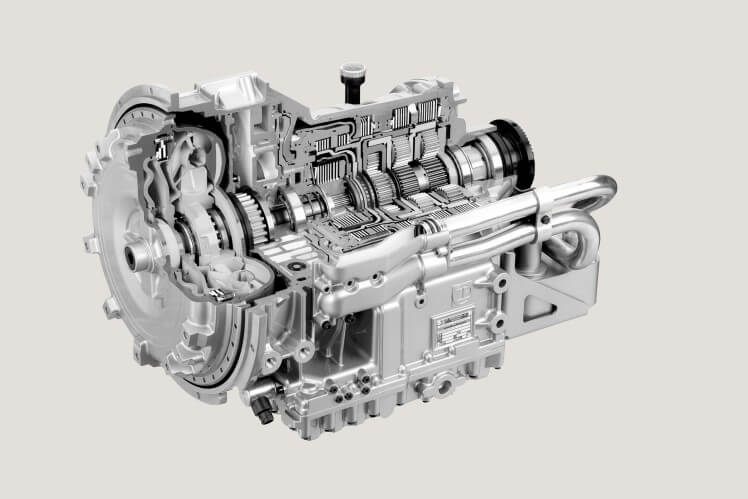
The ZF Ecomat is a fully automatic transmission developed by ZF Friedrichshafen AG, engineered specifically for transit buses, intercity coaches, and heavy municipal vehicles. It’s a hydromechanical unit — combining a torque converter with a planetary gear train — designed to handle the stop-and-go demands of public transit and the sustained loads of long-haul coach operations.
The Ecomat family includes several variants, each rated for different vehicle weights and power outputs:
- Ecomat 2 — the core transit bus platform, widely used in city bus fleets
- HP 500 — rated for vehicles up to 18 tonnes GVW
- HP 590 — mid-range variant for heavier bus and coach applications
- HP 600 — top-rated variant for the heaviest coach and specialty vehicle applications
ZF introduced the Ecomat as a purpose-built solution for the passenger transport sector, and it became a standard fitment across major bus OEMs worldwide. If your fleet runs ZF-equipped buses, chances are you’re running one of these variants.
Common ZF Ecomat Transmission Troubleshooting
The Ecomat is a robust unit, but high mileage, deferred maintenance, and demanding duty cycles will surface problems. Knowing what to look for is the first step — but ZF Ecomat transmission troubleshooting goes deeper than symptoms. Most issues trace back to specific subsystems, and misdiagnosing the root cause leads to repairs that don’t hold.
Here are the most common failure modes our team sees:
Slipping or Hunting Between Gears
Gear slip or erratic shifting is often a sign of clutch pack wear or hydraulic pressure loss. On the Ecomat, worn clutch linings reduce the clamping force needed to hold a gear under load. Low line pressure — caused by a worn pump or internal leakage — compounds the problem. This isn’t a adjust-and-drive situation. A unit that’s slipping needs a full pressure test before anything else.
Overheating
The Ecomat relies on transmission fluid for both lubrication and hydraulic control. When fluid breaks down from heat cycling or extended service intervals, the entire system suffers — seals harden, clutch material degrades, and valve body response slows. Overheating is common in city bus applications where the torque converter is working constantly in stop-and-go traffic. Per ZF service guidelines, fluid and filter service intervals should be strictly followed — check your variant’s service manual for the specific interval.
Shift Quality Deterioration
Hard shifts, delayed engagement, or failure to upshift cleanly often point to the valve body. The Ecomat’s electrohydraulic valve body controls shift timing and pressure modulation. Contaminated fluid, worn solenoids, or damaged valve bores will all affect shift quality. This is a precision component — it’s not a clean-and-reinstall fix on a high-mileage unit.
Hydraulic Faults & Fault Codes
The Ecomat’s electronic control unit logs fault codes that flag solenoid failures, pressure sensor faults, and speed sensor issues. ZF Ecomat transmission troubleshooting using the diagnostic interface gives technicians a starting point — but fault codes identify the symptom, not always the root cause. A solenoid fault code, for example, can be triggered by the solenoid itself, wiring, or a hydraulic pressure issue affecting the circuit. Proper diagnosis requires both electronic readout and hydraulic pressure testing.
Torque Converter Issues
Shudder at low speed, poor acceleration response, or excessive heat generation can point to torque converter failure. On high-mileage Ecomat units, internal converter wear is common — and a converter that’s failing internally will contaminate the rest of the transmission with debris if it’s not addressed.
ZF Ecomat Transmission Repair & Rebuild Process
When a ZF Ecomat transmission comes into one of our facilities, it doesn’t get a quick patch and a return-to-service. ZF Ecomat transmission repair at Precision Transmission is a structured process — from initial diagnostics through final dyno validation — because a bus transmission that fails in service isn’t just a repair cost, it’s a fleet liability.
Diagnostics First
Every unit starts on the bench with a full diagnostic workup. We connect to the ECU, pull fault codes, and cross-reference them against ZF’s diagnostic documentation. From there, we pressure-test the hydraulic circuit to establish baseline line pressure, clutch apply pressure, and converter charge pressure. Electronic readout and hydraulic data together give us a complete picture before anything is disassembled.
Full Teardown & Inspection
Once diagnostics are complete, the unit comes apart — completely. We don’t rebuild around worn components. Every clutch pack, piston, seal, bearing, and gear set is inspected and measured against ZF OEM tolerances. The valve body is cleaned, tested, and inspected for bore wear. The torque converter is inspected and tested separately. Anything that doesn’t meet spec gets replaced — with OEM or remanufactured OEM parts, not aftermarket substitutes.
OEM Parts Standard
At Precision Transmission, we use OEM and remanufactured OEM components exclusively on ZF Ecomat transmission repair work. As an authorized ZF Off-Highway distributor, we have direct access to genuine ZF parts — seals, clutch kits, solenoids, valve body components, and internal gear train parts. That access matters on a unit like the Ecomat, where aftermarket part quality is inconsistent and the cost of a comeback far exceeds any savings on the component.
Reassembly to OEM Spec
Reassembly follows ZF’s service documentation — torque specs, clearances, and clutch pack clearances are measured and set to factory tolerances. We don’t estimate. Every critical measurement is recorded, and the unit is built to the same standard as a factory reman unit.
Dyno Testing Before Release
Every rebuilt Ecomat unit is tested on one of our three in-house dynamometers before it leaves the shop. We run the unit through its full shift schedule under load — verifying shift points, line pressure, clutch apply quality, and converter lockup. If it doesn’t perform to spec on the dyno, it doesn’t ship. That’s not a marketing claim — it’s how we’ve operated for over 30 years.
ZF Ecomat Parts & Exchange Program
For fleets that can’t afford extended downtime, waiting on a full rebuild isn’t always an option. That’s where our parts inventory and exchange program come in.
Exchange Units
Precision Transmission maintains a inventory of exchange Ecomat units — fully rebuilt, dyno-tested, and ready to install. The exchange program works straightforwardly: your failed unit comes out, a rebuilt unit goes in, and your vehicle is back in service while your core unit goes through the full rebuild process. For transit fleets managing tight schedules, this is often the most practical path to getting a bus back on the road without waiting on a bench rebuild turnaround.
ZF Ecomat Parts Availability
As an authorized ZF Off-Highway distributor, we carry genuine ZF parts for the Ecomat line — clutch kits, solenoid assemblies, valve body components, seals, filters, and internal gear train components. We also stock remanufactured OEM units and components for applications where a reman solution makes more sense than new. That said, inventory moves — contact our parts team directly to confirm what’s available for your specific variant and application.
OEM vs. Remanufactured OEM vs. Aftermarket
This is a question we get regularly, so it’s worth addressing directly:
- OEM parts are manufactured by ZF to exact factory specifications. They’re the benchmark.
- Remanufactured OEM parts are original ZF components that have been fully disassembled, inspected, measured, and rebuilt to factory tolerances — with all wear items replaced. Every reman unit we supply is backed by a standard warranty and has been dyno-tested before it leaves our facility.
- Aftermarket parts vary widely in quality and are not something we use on ZF Ecomat transmission repair work. On a heavy-duty automatic handling the loads a transit bus puts through a transmission every single day, the cost of a failed aftermarket component — in downtime, labor, and liability — far outweighs any upfront savings.
Warranty Coverage
Rebuilt units and remanufactured OEM components supplied by Precision Transmission carry a standard warranty. Reach out to our team for warranty specifics on your application — coverage can vary depending on the unit, the repair scope, and the operating conditions.
Why Choose an Authorized ZF Distributor
Not every transmission shop can work on a ZF Ecomat — and not every shop that says they can has the parts access, tooling, and documented process to do it right. Here’s what sets Precision Transmission apart:
- Direct ZF OEM parts access. As an authorized ZF Off-Highway distributor, we source genuine ZF parts directly — not through third-party distributors or the secondary market. The right components go into your unit every time.
- 30+ years as a ZF distributor. This isn’t a recent certification. Our technicians have worked on ZF transmissions across multiple product generations, including legacy Ecomat variants still running in older fleets.
- Two full-service facilities. Colmar, PA and Fort Myers, FL — both equipped with in-house dynos, experienced ZF-trained technicians, and parts inventory on hand.
- Three in-house dynamometers. Every rebuilt unit is dyno-tested under load before release. Most shops don’t have this capability. We do.
- On-site support & national reach. We handle shipping logistics for units coming from outside our service areas and offer on-site diagnostic support when equipment can’t move. We work with fleets nationally.
Frequently Asked Questions
What are the most common ZF Ecomat transmission problems?
The most frequently reported issues on Ecomat units are gear slipping, hard or delayed shifts, overheating, and hydraulic pressure faults. Most trace back to clutch pack wear, valve body deterioration, or fluid breakdown from extended service intervals. ZF Ecomat transmission troubleshooting should always start with a full electronic diagnostic and hydraulic pressure test — symptoms alone don’t tell the full story.
Can any transmission shop rebuild a ZF Ecomat?
Technically, any shop can attempt it — but the Ecomat is an electrohydraulic unit with tight OEM tolerances and model-specific components. Without direct access to genuine ZF parts, ZF diagnostic tooling, and documented rebuild procedures, the result is rarely a transmission that performs to factory spec. An authorized ZF distributor with in-house dyno capability is the right call for this unit.
How long does a ZF Ecomat transmission repair take?
Turnaround depends on the repair scope, parts availability, and whether an exchange unit is the right solution for your situation. A full bench rebuild takes longer than an exchange swap — which is why we maintain rebuilt exchange units ready to install. Contact our team with your unit’s variant and condition for a realistic turnaround estimate.
What is the difference between a ZF Ecomat repair and a full rebuild?
A repair addresses a specific failed component — a solenoid, a seal, a clutch pack — without a full teardown. A rebuild is a complete disassembly, inspection, and reassembly to OEM tolerances with all wear items replaced. For high-mileage units or units with multiple failure points, a full ZF Ecomat transmission repair and rebuild is almost always the more reliable long-term solution. Patching one problem on a worn unit typically surfaces the next one quickly.
Does Precision Transmission offer a warranty on rebuilt ZF Ecomat units?
Yes. Rebuilt units and remanufactured OEM components carry a standard warranty. Specifics vary depending on the unit, repair scope, and operating conditions — reach out to our team for details on your application.
Contact Precision Transmission
The ZF Ecomat is a capable, well-engineered transmission — but when it needs service, it needs a shop that knows it. ZF Ecomat transmission troubleshooting, repair, and rebuild work requires the right parts, the right tooling, and a documented process backed by real ZF expertise. That’s what we bring to every unit that comes through our doors.
Whether you’re dealing with a transmission that’s slipping, a fleet unit that won’t shift cleanly, or a bus that’s been sidelined by a hydraulic fault — our team is ready to diagnose it, repair it, and put it back in service the right way.
To discuss ZF Ecomat transmission repair, exchange units, or parts availability, reach out through our contact page. Our team will route you to the right specialist at our Colmar, PA or Fort Myers, FL facility.