
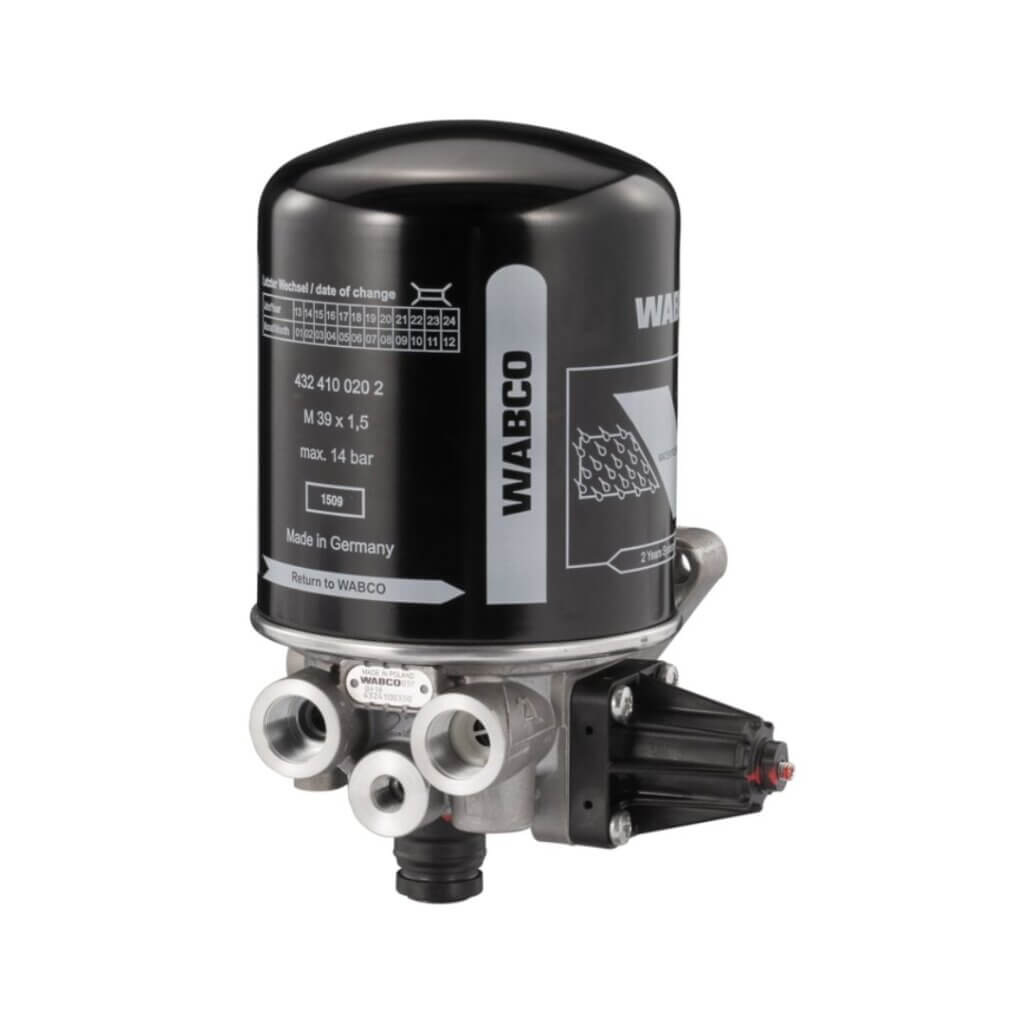
If you’ve ever experienced sluggish brakes or unexpected moisture build-up in your air brake system, you already know how critical routine maintenance is. One part that often gets overlooked, until it’s too late, is the WABCO air dryer—and more specifically, the WABCO air dryer purging process.
Whether you’re a fleet manager, a long-haul trucker, or a diesel tech keeping rigs roadworthy, understanding WABCO air dryer purging can make the difference between smooth stopping and a costly breakdown. This article unpacks everything you need to know, from how the system works to signs something’s going wrong.
How Does a WABCO Air Dryer Work?
Before we dive into WABCO air dryer purging, it helps to understand the basic function of the system.
Picture this: every time your truck’s compressor pulls in air, it’s also pulling in water vapor, oil particles, and even dust. Left unchecked, this moisture condenses in the brake lines, leading to freezing in winter, corrosion in the valves, and sluggish braking performance year-round. That’s where the WABCO air dryer comes in.
WABCO air dryers remove contaminants before the air reaches the brake system. Inside the dryer is a desiccant cartridge, which absorbs moisture. Once it becomes saturated, the air dryer must purge that moisture to continue operating effectively. That purge cycle is what keeps the system clean and safe.
What Is WABCO Air Dryer Purging?
WABCO air dryer purging is the process of expelling moisture, oil, and contaminants from the air dryer’s desiccant cartridge. During normal compressor cycling, the system routes a short blast of air—called the purge burst—through the cartridge to release built-up moisture.
This purge cycle typically happens every time the compressor reaches cut-out pressure. You’ll often hear it as a quick hiss or “psst” noise after the compressor shuts off.
But here’s the kicker: if the purge function fails, the desiccant becomes overloaded. Moisture gets pushed downstream into your braking components, leading to rust, stuck valves, and ultimately brake failure. That’s why WABCO air dryer purging isn’t just maintenance—it’s mission-critical.
Why WABCO Air Dryer Purging Is Critical to Your Air Brake System
Imagine relying on your brakes while hauling 80,000 pounds down a steep grade—and discovering too late that the brake lines are frozen or corroded. This is not just inconvenient; it’s dangerous and potentially life-threatening.
WABCO air dryer purging ensures that:
- Moisture doesn’t accumulate in your air lines
- Brake valves remain responsive
- Air tanks stay clean and dry
- Freezing doesn’t occur in cold temperatures
Without routine WABCO air dryer purging, you’re risking both your equipment and the safety of everyone on the road. Trucks without properly working dryers often end up in the shop with costly repairs to the brake system—repairs that are entirely preventable.
How Often Should WABCO Air Dryer Purging Happen?
Good question—and the answer depends on your driving conditions, weather, and compressor cycle frequency.
For most over-the-road trucks, WABCO air dryer purging occurs automatically during normal operations, several times an hour. However, if your routes involve:
- High humidity
- Extreme cold
- Frequent starts and stops
…you’ll want to check that purge functionality more often. Many fleets inspect the air dryer system every 3 to 6 months, especially before winter sets in. And any sign of excessive moisture in your air tanks? That’s a red flag that purging isn’t happening as it should.
How Do You Know If Your Air Dryer Purge Valve Is Bad?
One of the most common culprits behind failed WABCO air dryer purging is a bad purge valve. This valve is what opens to release the moisture-laden air—and if it sticks, leaks, or fails to seal properly, the whole system can fall apart.
Here are signs your purge valve might be on its way out:
- You don’t hear the telltale purge hiss
- Moisture or oil is found in downstream air tanks
- Compressor runs too frequently
- Visible rust in your air lines
- Your brake system seems sluggish or uneven
Sometimes, debris gets stuck in the purge valve. Other times, the valve diaphragm cracks or wears out. If you suspect a faulty purge valve, don’t wait—it’s far cheaper to replace a valve than to rebuild your entire brake system later.
Common Symptoms of a Failing Air Dryer System
If you’ve ever driven in freezing conditions and felt your brake pedal go stiff—or worse, unresponsive—you might’ve experienced the effects of poor WABCO air dryer purging.
Here’s what to watch for:
- Excessive moisture draining from the air tanks
- Oil or rust contamination in the brake lines
- Loud or extended purge cycles
- Increased compressor duty cycles
- Failure to reach proper air pressure
It’s easy to overlook these symptoms, especially when they develop gradually. But much like ignoring a small oil leak, letting air dryer problems slide can lead to catastrophic failure down the road.
Troubleshooting WABCO Air Dryer Purging Issues
Diagnosing WABCO air dryer purging problems starts with observation. First, make sure your system is building up pressure correctly. Listen for the purge cycle after the compressor cuts out. If you don’t hear it, start with the purge valve and governor.
Check these components:
- Purge valve: Cracked diaphragm? Clogged filter? Worn O-rings?
- Air governor: Not signaling cut-in/cut-out correctly?
- Check valve: Leaking backflow preventing purge?
- Desiccant cartridge: Saturated or expired?
Always wear safety gear when inspecting the system, and never attempt repairs with pressure in the tanks. If you’re unsure, have a qualified technician do a full diagnostic.
Best Practices to Maintain Your WABCO Air Dryer System
Want to avoid emergency repairs? These habits will help keep your WABCO air dryer purging system working the way it should:
- Inspect the purge valve regularly – Look for signs of leakage, corrosion, or damage.
- Replace the desiccant cartridge every 1 to 2 years, depending on usage and environment.
- Drain air tanks daily to monitor for moisture build-up.
- Listen to your purge cycle – A missing or unusually long purge means something’s off.
- Use OE-quality replacement parts – Cheap aftermarket valves often fail early.
A small investment in regular upkeep can save thousands in brake repairs—and a lot of downtime.
When to Replace vs. Repair WABCO Air Dryer Components
It can be tempting to try and patch things up when you’re under a tight schedule. But not all components are worth saving.
Replace your purge valve if:
- It leaks air constantly
- The diaphragm is damaged
- It fails to open during the purge cycle
Repair might be possible if:
- A minor obstruction is causing the issue
- The valve body is still in good condition
- Replacement kits are available from WABCO or OE suppliers
As for the desiccant cartridge, replacement is usually better than recharging or drying it out. Once it’s saturated, performance drops fast—and so does your safety margin.
Where to Get Professional Help with WABCO Air Dryer Purging
If you’re having issues with WABCO air dryer purging, Precision Transmission is the team you can trust. We’re not just experienced—we’re official WABCO suppliers and certified technicians, which means we have direct access to genuine WABCO components, technical specifications, and factory-level training.
Why does that matter? Because with WABCO systems, precision is everything. Incorrect parts, improper installation, or rushed diagnostics can compromise your entire air system. At Precision Transmission, we do the job right the first time—backed by WABCO’s standards and our reputation for excellence.
We offer:
- OEM WABCO part replacements
- Certified testing and diagnostics
- Professional desiccant cartridge servicing
- Purging system inspections and valve replacements
- Fleet-wide preventative maintenance plans
Whether you’re a single-owner operator or managing a fleet, we provide dependable, WABCO-approved service that protects your investment and keeps your brakes reliable, mile after mile.
Don’t risk safety or compliance with guesswork. Trust the WABCO experts at Precision Transmission—we keep air systems clean, dry, and road-ready.