
Crane Transmission: Keeping Heavy-Duty Lifting Equipment Running
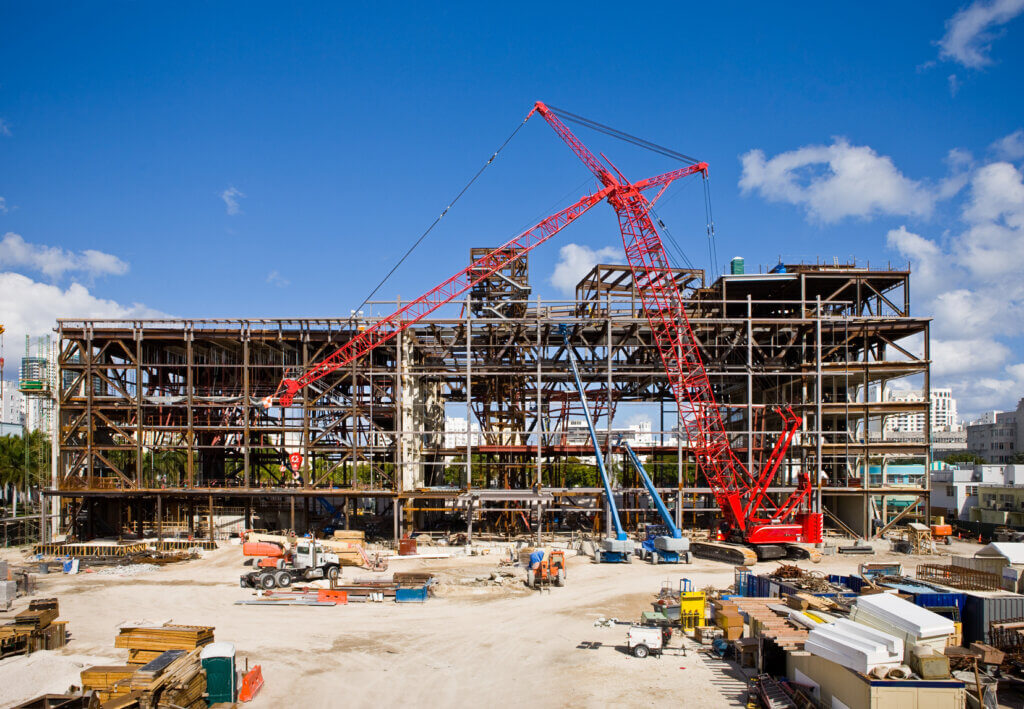
Crane Transmission Repair Starts With Understanding the Load
A crane transmission doesn’t operate like a truck transmission or a construction dozer. It manages power across multiple functions simultaneously — hoisting, slewing, traveling — often under continuous load, in heat, and without the recovery time a road vehicle gets between cycles. When a crane transmission fails on a jobsite, the crane stops. The load stays where it is. The schedule doesn’t.
At Precision Transmission, we’ve been repairing and rebuilding crane transmissions for decades across our facilities in Colmar, PA and Fort Myers, FL. We work on units from Liebherr, Link-Belt, Manitowoc, Grove, Terex, Demag, and Tadano — the same brands your equipment runs. This article covers the failure modes we see most often, how we approach crane transmission repair and rebuild, and what to look for when choosing a service partner.
Common Crane Transmission Failure Modes
Thermal Breakdown and Fluid Degradation
Crane transmissions run hot. ZF recommends transmission oil change intervals based on both time and operating hours — and in crane applications, operating hours accumulate fast. When fluid breaks down under sustained thermal load, viscosity drops, film strength degrades, and gear and bearing surfaces lose protection. The result is accelerated wear across the gear train. Monitoring fluid condition against the OEM-specified interval — not a generic calendar schedule — is the first line of defense.
Gear and Bearing Wear
Repetitive high-torque cycling wears gear tooth profiles and bearing raceways over time. On mobile crane transmissions, this shows up as noise under load, hesitation during direction changes, or loss of torque at the hook. Left unaddressed, worn bearings allow shaft deflection that accelerates gear mesh deterioration. By the time it’s audible, the internal damage is typically significant.
Hydraulic Circuit Pressure Loss
Many crane transmissions use hydraulically actuated clutch packs to manage range selection and direction changes. Seal degradation, worn pump components, or contaminated fluid can drop circuit pressure below the minimum threshold required for full clutch engagement. The result is slippage under load — a condition that generates heat, accelerates wear, and compounds quickly. Pressure testing the hydraulic circuit is a standard diagnostic step before any teardown.
Electronic Control System Faults
Modern crane transmissions — particularly ZF units — rely on electronic control units to manage shift logic, monitor temperatures, and protect the transmission from out-of-range operating conditions. Sensor failures, wiring harness issues, or ECU faults can produce erratic shift behavior, fault codes, or protective shutdowns. Diagnosing these requires the correct OEM diagnostic tooling, not generic scan equipment.
Crane Transmission Repair, Rebuild, or Remanufacture — Choosing the Right Path
Not every crane transmission failure requires the same response. The right call depends on what failed, how far the damage has progressed, and what the equipment’s workload looks like going forward.
Repair addresses a specific failed component — a seal, a solenoid, a bearing — when the rest of the transmission is in serviceable condition. It’s the fastest and lowest-cost option when the damage is genuinely isolated.
Rebuild involves a full teardown, inspection of all components, and replacement of everything worn or out of spec. A properly executed rebuild restores the transmission to OEM tolerances. This is the right call when wear is widespread but the core components — shafts, housings, gear sets — are salvageable.
Crane transmission remanufacturing goes further. Every wear item is replaced regardless of apparent condition. The unit is reassembled to OEM specifications, then load-tested on a dyno under controlled conditions before it ships. At Precision Transmission, every remanufactured unit is backed by a standard one-year warranty with unlimited hours — because it’s been validated, not just assembled. For crane operators running high-utilization equipment, remanufacturing eliminates the uncertainty that comes with a repair or a selective rebuild.
We maintain an exchange inventory of remanufactured crane transmissions to reduce lead time. Contact us to check availability for your specific unit.
How Precision Transmission Handles Crane Transmission Work
Teardown and Inspection
Every unit that comes into our facility gets a full teardown before any quote is finalized. We photograph components, measure clearances and tolerances against OEM spec, and document what we find. You get an honest assessment — not a number based on what it looked like from the outside.
Dyno Testing
We run three in-house dynamometers. Every rebuilt and remanufactured crane transmission we ship has been load-tested under controlled conditions before it leaves the building. This isn’t a final spin — it’s validation that the unit performs to spec under the operating conditions it will actually see in the field.
OEM Parts and Sourcing
We use OEM and OEM-compliant parts throughout. As a ZF Off-Highway distributor, we have direct access to ZF components for the crane transmission units that platform requires. For other brands — Liebherr, Manitowoc, Link-Belt, Dana, Spicer — we source through established OEM supply relationships. If a part isn’t on the shelf today, our team will tell you that directly and give you a realistic lead time.
Exchange Program
For crane operators who can’t afford extended downtime, our exchange program provides a remanufactured unit off the shelf while your core is rebuilt. Contact our parts team to confirm exchange availability for your specific model.
What to Look for in a Crane Transmission Service Partner
Crane transmissions are not a commodity repair. The shop you use needs specific capabilities — not general heavy-duty experience.
Dyno capability. A transmission that hasn’t been load-tested hasn’t been validated. Ask whether the shop runs a dynamometer and whether your unit will be tested before it ships.
OEM brand coverage. Crane transmissions span a range of manufacturers and platforms. The shop needs documented experience with your specific unit — not just heavy equipment in general.
Exchange inventory. Lead time matters when a crane is down. A shop with an exchange program can cut your downtime significantly compared to a build-to-order repair.
Warranty backed by testing. A warranty is only meaningful if it reflects actual performance validation. Our one-year, unlimited-hours warranty on remanufactured units is backed by dyno data — not just paperwork.
Honest diagnostics. Full teardown before quoting means you know what you’re actually paying for. Shops that quote off symptoms risk missing damage — and you absorb the cost when it comes back.
Frequently Asked Questions
How long does crane transmission repair typically take?
Turnaround depends on the failure mode, parts availability, and whether an exchange unit applies. A targeted repair on an isolated component can turn in days. A full rebuild or remanufacture typically runs longer depending on parts lead time for your specific unit. Contact us with your transmission model and we’ll give you a realistic timeline, not a placeholder.
Can you repair crane transmissions from Liebherr, Manitowoc, and Link-Belt?
Yes. We service crane transmissions across all major platforms including Liebherr, Manitowoc, Link-Belt, Grove, Terex, Demag, and Tadano. Our technicians work from OEM service documentation for each brand.
What’s the difference between a rebuilt and a remanufactured crane transmission?
A rebuild addresses worn and failed components identified during inspection. A remanufactured unit replaces all wear items regardless of apparent condition, is assembled to OEM tolerances, and is dyno-tested before it ships. Remanufacturing is the higher standard — and the one we recommend for high-utilization crane applications.
Do remanufactured crane transmissions come with a warranty?
Yes. All remanufactured units from Precision Transmission are covered by a standard one-year warranty with unlimited hours. Every unit is dyno-tested before it leaves our facility.
How do I know if my crane transmission needs repair or full replacement?
That determination requires a full teardown and inspection — it can’t be made from symptoms alone. We perform a complete inspection before any quote so you know exactly what the unit needs. Contact us to get the process started.
Talk to Precision Transmission About Your Crane
If your crane transmission is showing signs of trouble — or if you’re planning ahead for a scheduled rebuild — reach out through our contact page. Our team will route you to the right specialist at our Colmar, PA or Fort Myers, FL facility. Bring us the transmission model, serial number, and what you’re seeing in the field, and we’ll give you a straight answer on the best path forward.